Anatomy Terms Lists

You may already be familiar with the handy lists of the literal meanings of anatomy terms that you may encounter in a typical human anatomy and physiology course.

These are discussed in the following blog articles:
In addition to the printable handouts that have been available for some time, I've also recently added interactive web versions to the Lion Den website. Here's a preview:

open image in new tab or window for a larger version
Click the image (at the blog) to enlarge the table to see details.

The muscle names list is found at lionden.com/muscle-names.htm

The list of bone marking types is found at lionden.com/bone-names-2.htm

The list of names of individual bones and markings is found at lionden.com/bone-names.htm

To download the printable handout versions of these lists go to lionden.com/downloads.htm

All of the links above require a free membership in the Lion Den.


Read More!

Lion Den Anatomy Lesson


One of the things about the new Lion Den site is that playful illustration you see at the top of the home page.

I call it Lion Den Anatomy Lesson and it's the creation of renowned illustrator Joe Kulka.

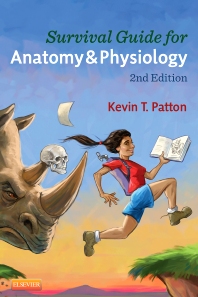
I first became aware of Joe's work when he did a series of small portraits of important scientists for one of my textbooks. Then he created some whimsical and engaging covers for the two editions of my book Survival Guide for Anatomy & Physiology.


Even if you haven't heard of Joe before, or haven't seen those Survival Guide book covers, you've probably seen his illustrations.  He's an award-winning children's book author and has created illustrations for many popular publishers, books, and projects. For example, you've seen Smokey Bear and Woodsy Owl, right?

When I recently undertook the complete rebuilding of the Lion Den website, with it's refocusing on the learning and teaching of human anatomy and physiology, I knew I needed a dramatic illustration to serve as the "first impression" for visitors. It dawned on me that Joe's Survival Guide book covers are not only visually appealing, but also tell a story in a playful way. And that playful tone is exactly what I want to project in the Lion Den website.

So I asked Joe if he could find some time in his busy schedule to create an image for my website. And he did!

I love the story Lion Den Anatomy Lesson tells. It shows a lion teaching an anatomy lesson. But if you look closely, you'll see that the labels on the muscle chart list meals—not muscle names. It's a playful take on the role of lions as predators. But in doing so, ties the "lion" identity of the website to it's "anatomy" content. Notice also that the lion "student" on the left, the one licking his lips in anticipation of a meal, reflects the lion featured in the Lion Den website's logo photograph.

I love the Lion Den Anatomy Lesson—I hope you enjoy it, too!


Read More!

The Lion Tamers Behind Lion Den's New Platform

How are you liking the new look and functionality of Lion Den? As Lion Den's creator, I'm thrilled with it.

As some of you know, I started Lion Den as a "personal" website many, many years ago—before most colleges had a website (not to mention a learning management system). My college was just getting their website up and running and I wanted to post news items for my students, class notes and other resources, and general study tips and tools to help my students succeed. But my college wanted a "public relations website" not a teaching-learning tool. Not willing to wait for them to come around to my way of thinking, I simply started my own website.

There are many advantages to having a website entirely under one's control as a professor. I've nearly always had a mix of part-time and full-time appointments, so it's an easy way to post common resources that all my students can use. I'm not at the whims of sudden and tightly scheduled changes to institutional platforms just at a time when I'm already overloaded with academic work. And I can be more entrepreneurial.

But there are downsides, too. I had to learn some tech stuff I didn't know. I love learning new things and taking on new challenges. So although it was work, I enjoyed it. But another downside—a big one—is that I had to be my own IT team.

Lucky for me, I eventually found a reliable web host that provides great support at a reasonable price—1and1.com. That helps a lot.

But the real work comes in setting up a website and maintaining it. As web technology has changed over the years, there have been a couple of times I've had to completely reconstruct my website in a new platform. That's a double load because I'm having to learn the new platform at the same time as I'm rebuilding it.

Recently, it became clear that I had to once again rebuild Lion Den. Students and teachers using it could not easily navigate, or even see, some of the resources on mobile devices. There were other issues, too.

But I'm very busy right now with teaching and textbook revising, not to mention family, so I decided to look for outside help. That's when I ran across S4supporta division of NeoSoft.

They have an outsourcing system that can scale from huge companies right down to little old me. And their prices scale right along with it. In their system, they match you to the IT professional that you need and you pay a reasonable hourly rate for their services.

I had some hesitation, I will admit. I wasn't sure I could speak "tech" with someone who is an expert. And besides needing someone to roll up their sleeves and do the rebuild, I also needed a mentor who could prepare me for maintaining the rebuild website.

But I wasn't disappointed. I was assigned a very amiable and talented programmer, Rajendar, who was perfect for me. Besides all the heavy lifting of reformulating all my content for a new, more modern and flexible, platform (Wordpress), he also contributed some brilliant ideas about rethinking some of the design and functionality of my website.

When the task was done, it was done. There has been no pressure to continue working with them. The agreement I signed is open-ended—I can rehire them for chunks of time only when I need them. I probably will at some point. When I want to try something new that I can't handle on my own. If something breaks badly. Or if I want build or rebuild another website or blog. No pressure—just willingness, if I should need them again.

If you have a website or blog or anything like that, and want your own affordable "IT department" to get you started or bail you out of a mess, then I recommend S4support enthusiastically.


Read More!

You, Too, Can Join the Lions!

We recently implemented the membership function of the new Lion Den website.

Besides the awesome prestige of being on the membership roster of the Lion Den, you will also have an easy way to access the various resources you may want or need in your learning or teach of human anatomy and physiology. For example, the world famous Lion Den Slide Collection is a free perk of membership.

And did I mention that membership in the Lion Den is free? What a great deal, eh?

Honestly, most of the pages in Lion Den can still be accessed without a membership. Only a few downloadable resources require a membership. But I plan on adding more members-only resources in the future. And if you join now, you'll have bragging rights that you were one of the first to join. And among lions, bragging rights are mighty important!

To join, go to the membership signup page at http://lionden.com/join-us.htm or simply click "Become a member" under "User Guides" in the top navigation menu of any page in the Lion Den.

As always, thanks for your support!


Read More!

Organization of Anatomy & Physiology Content

In the newly updated Lion Den website, you'll quickly notice that I've reorganized how the content of the anatomy and physiology material is "packaged" for the website.

Although the individual pages remain pretty much intact in terms of their content—while at the same time sporting a new sleeker design—the way they are grouped in the navigation tools has changed.

First, there is a clear distinction between the LEARNING content and the TEACHING content.


Next, the content outlines are organized as one whole set, rather than the former A&P 1 and A&P 2 distinctions. They are just Learning Outlines, listed one after the other.

However, nested within the list of outlines is a mini-set of Pre-A&P Review Outlines. These go with my Pre-A&P course, but are useful to any A&P student to review before taking A&P.  Or they can be used to refresh yourself as you begin your A&P course.

I'm still clearing out old references to the A&P 1 / A&P 2 distinction—but eventually, that will all be gone.  Simply look for the topic you need without the 1/2 distraction that may not exactly fit the course you are taking.


The organization of the various Learning Tips and Tools remains pretty close to what it was in the old Lion Den.

Take a few minutes to hover over the various elements of the top navigation bar to see where it's all located. You may even stumble upon some hidden treasure that could help you out!


Bottom photo: Tbuckley89


Read More!

The New Lion Den Is Here!

The new version of the Lion Den website just rolled out, and I'm pretty excited about it.

Because I needed to change to a platform that is friendly to more types of devices, particularly small screen devices, I went all out and upgraded to a more sophisticated system. This system allows me to add features that were not possible before—given my limited range of coding skills.

I hired a professional web development team to make the conversion. Along the way, we made quite a few design changes to make the site more user friendly. And easier to navigate.

You will also notice that the content now focuses entirely on learning and teaching human anatomy and physiology. This alone makes the Lion Den easier to navigate.

My friends, given the nature of how these roll-outs go, there are bound to be some hiccups. So please have patience. And more importantly, please contact me with detailed reports of glitches so that I can fix them!


I'll be pointing out special features of the new Lion Den over my next few posts. And I'll be sharing new features and functionalities as I implement them.

If you want to stay posted on these developments, be sure to sign up for the free email newsletter, which delivers new postings right to your inbox. And while you're at it, consider subscribing to my other newsletters, too! Subscribe here.

Read More!

The Lions Are Getting Ready to Migrate!

Lion taming is a lot of work. Especially when you are training them for all new behaviors AND moving them to a newly built home!

That's what's going on right now in the Lion Den. We are developing a new website platform.  It's still a little while until the lions are ready to move in to their new digs, but here's a preview of what to expect:

  • The same reliable and useful content for learning (and teaching) human anatomy and physiology
  • A streamlined set of resources that focus entirely on human structure and function, with all the "old" travel and circus content out of the way.
  • A whole new, updated look.  But the lions will still look like lions. Check out the updated logo above.
  • An updated, modern flexible format that will be easy to use. Even on mobile devices!
  • All the helpful "extra" features that help you use the content. And a few new ones.
For now, it's pretty much the same old Lion Den. I just didn't want you to be surprised when you enter some time in the future and wonder what amazing adventure you've just landed in!
Read More!

Videos and Pencasts Updated

I recently updated the codes for all the videos and pencasts embedded in pages of the Lion Den.  Most of these are in the Study Tips & Tools section of the website.

The updates were required because they use Flash/Shockwave code, which is now no longer recognized by most major browsers.  The new code work as good or better than the old code, so now the videos will work just fine.

Livescribe has completely changed the way  pencasts are shared, and can no longer function within a webpage.  The good news is that they are still easy to use.  But the new format did require that I recast things on my end where they had appeared on web pages.  Again, these are mainly on the Study Tips & Tools pages.

Here's a sample video on Exam Strategies from the page Taking Tests.


Read More!

New Online Orientation for Pre-A&P (BIO 095)

I recently updated the Online Orientation for my online "refresher" course in Pre-A&P Foundations in Science.

Besides updating the content of the orientation to reflect recent changes in our college website, I also replaced the previous audio version with a new video version.  The video version has closed captioning.  So for the hearing impaired (or the sound-sensitive) I have two options: captions in the video or a read-only print version.

The Online Orientation page is found at lionden.com/fis-orientation.htm

Watch the video


If you're not familiar with  my Pre-A&P course and want an overview, please check out lionden.com/fis-overview.htm


Read More!

Pre-A&P Syllabus Updates for Spring 2016

Today, I updated the syllabus for Pre-A&P Spring 2016.

The updates include:
  • revised list of audit/drop dates
  • clarification of extra/special help availability
  • updated links/references to resources now available through the new mySCC portal
Also, the copyright date notice for all pages in the Lion Den was updated to reflect the new year.
Read More!

New Textbook and Video Content in Pre-A&P Outlines

Today I added some additional mini-icons to the Review Outlines for my Pre-A&P-Foundations in Science course.

The textbook references link to "open" textbooks from OpenStax and textbook content from Kahn Academy.  There is a new "book" icon that identifies these links.

There are also several new links pointing to videos from Kahn Academy, identified by the "video icon."


Read More!

PRE-A&P Syllabus Updated

I just did my usual pre-semester update to the BIO 095 (Pre-A&P) syllabus.

There are no changes to the course, but the syllabus as been revised to include a list of learning outcomes for each course objective to better inform readers of the content and learning goals of the course.

A number of sentences or paragraphs were tweaked to better clarify course policies, procedures, and goals.

The list of withdrawal dates for fall and spring offerings of the course was updated. Read More!

Updated Teaching Resources and RSS feeds

Today the pages focused on resources for A&P teachers were updated. Links to these pages can be found at lionden.com/ap_teacher_resource.htm

Also updated are the RSS feeds that are found near the bottom of most anatomy & physiology related pages.  The posts from feeds now shows up in a different format that is more compatible with the overall design of the Lion Den website.

The feeds are also categorized as "for A&P students" or "for A&P teachers" to better focus the user.  Teacher-related content appears only on pages that are specifically directed to teachers.  Student-related content appears on all A&P-related pages.

The change in feeds also represents a move to a different feed aggregator than used previously. Read More!

Handbook of Anatomy & Physiology

Last week I added a new page in the Lion Den describing a new tool for your A&P learning toolbox:


First introduced a decade ago, this popular pocket guide has been completely updated with newly revised content and an almost complete redraw of the illlustrations.

Many A&P students have found this guide useful in their first A&P course.  But they've also found that it's a great tool to have in their pockets during later courses, especially clinical experiences, and even in their jobs, as they've needed a quick refresher on essential structures & functions of the human body.

Many clinicians find the Handbook of A&P to be a great tool for patient teaching.  The diagrams and tables often help explain basic anatomy or physiology to a patient trying to understand their health condition or a medical procedure.

The handbook is also useful in other professions such as insurance, art illustration, law enforcement, fashion, fitness,  and business, when knowing about the structure or function of the body (or its parts) is helpful to getting the job done right.


Read More!

New edition of Survival Guide for A&P

Over the past weekend, I updated the page regarding the Survival Guide for A&P, which has recently come out in a second, expanded edition.

Some of the new features include: 
  • Two additional sections on key study skills, bringing the total to 12.
  • Expanded tables on muscles and bones that include pronunciation guides and literal translations of each structure listed.
  • More of those popular cartoons highlighting principles and analogies covered in the guide.
  • More analogies and models to help student get some of the common sticky points in the A&P course.
  • New sections on text anxiety, using digital tools for learning, and English as a second language.
  • A lot more!


Read More!

BIO 095 pages updated

I recently updated the navigation menue, Syllabus (lionden.com/fis.htm), and other course pages for BIO 095 to reflect the change in name of this course.

BIO 095 will now be called Pre-A&P Foundations in Science.

http://lionden.com/fis-overview.htm


Read More!

Updated "Bone Names" page

I recently added additional advice to the page Bone Names in the Field Guide to the Body series:


Plain Latin

simple bone namesYeah, I know it would be SO much easier if bone names were in plain English. But they're not, and no amount of whining (I've discovered) is going to change that.
But bone names are in plain "everyday" Latin. Meaning that most bone names are simple—and I meanreally simple—Latin words and phrases. For example, the bone name tibia sounds weird to us but it's simply "shin-bone" in Latin. Likewise, humerus is "arm," sternum is "breast-bone," and femur is simply "thigh."

And some terms you know already, because the Latin name is also the English name. For example, you already know ribskull, and pelvis.

The point is that it makes learning bone names far easier if you approach it as simply learning new names for things you (pretty much) already know.

Let's look at this approach a little more closely . . . click Bone Names for more
Read More!

Learning bone names

I recently added a new page in The Field Guide to the Human Body series:


This page has a variety of hints on how to get started learning the human skeleton by getting a handle on the terminology of bones and bone markings.

There are also links to handouts that can be used a reference to employ the suggested methods of study.

foramen ovale


Read More!

Added page on mnemonics for A&P

Today I added a new page in the Study Tips & Tools section of the Lion Den.  This one outlines the use of mnemonic devices (memory aids) in studying A&P.

Mnemonics are particularly useful for remembering lists.

Check it out at lionden.com/mnemonics.htm Read More!

Reading strategies

Today I added a new video to my Reading Strategies page at lionden.com/reading.htm

Or you can view it here.

Read More!